AI-powered Saas platform
Improving CX team efficiency through AI-driven workflows
CX agents at enterprise companies were spending too much time doing work that didn't need a human; hunting for context, manually routing tickets, and reading through raw data to understand customer sentiment.
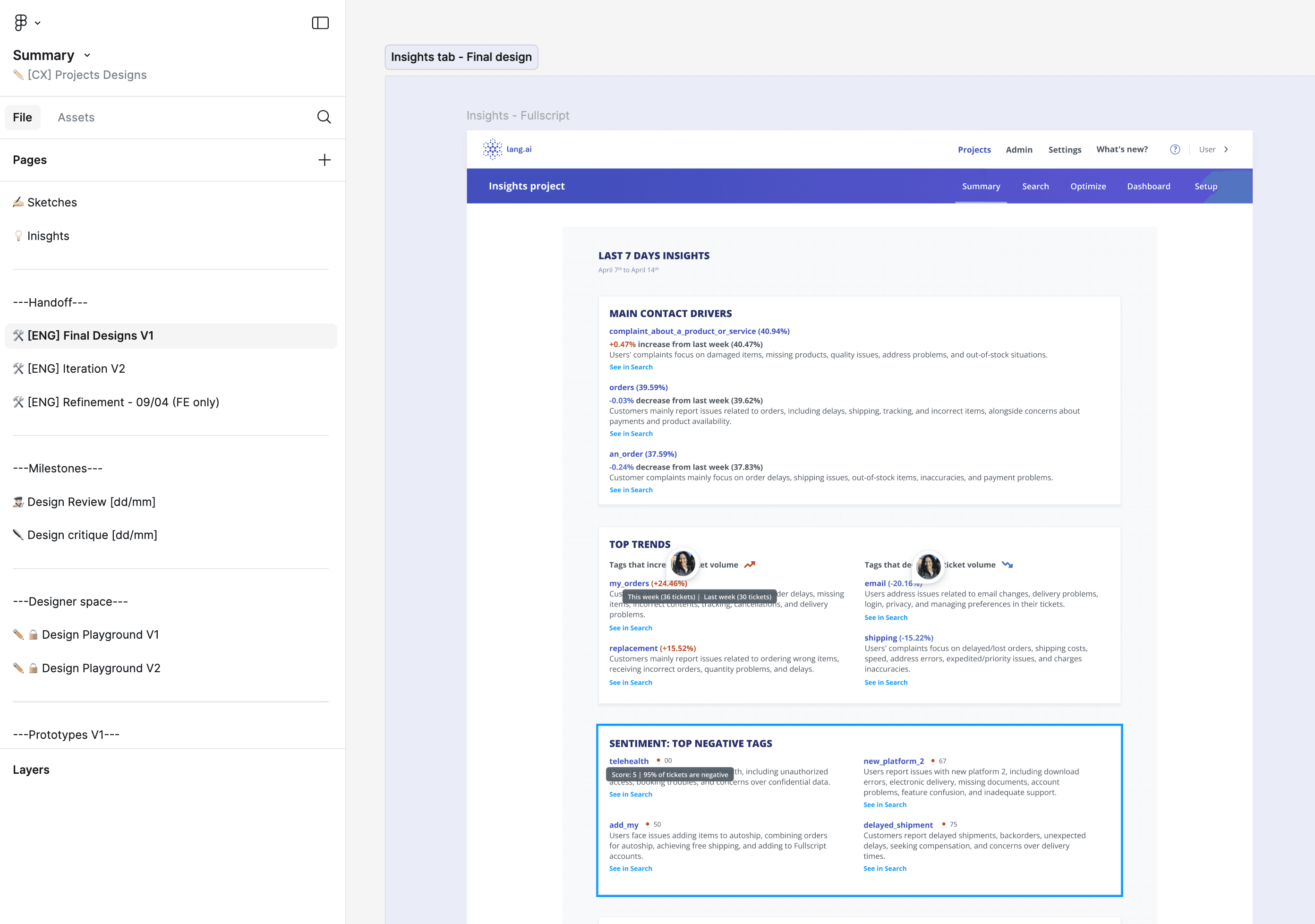
As the sole designer over two years, I shipped AI-powered features that surfaced that intelligence automatically, including automated workflow recommendations, a sentiment analysis layer, and an AI insights summary view.
The result: faster agent response times, less manual effort, and a product that felt intelligent rather than just functional.
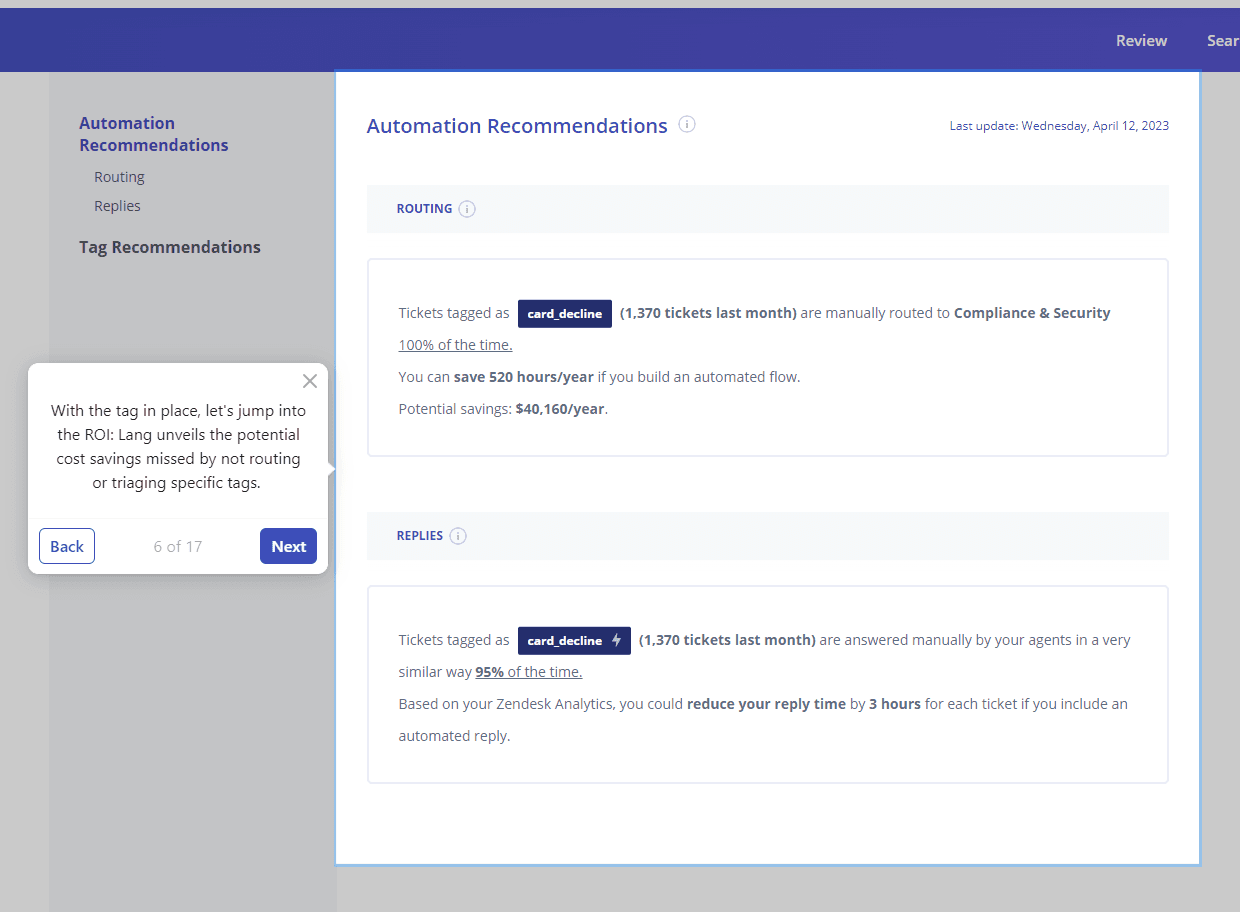

Lang.ai sits at the intersection of AI and customer support; turning raw conversation data into something teams can actually act on. I was the sole designer on the product for two years, working across multiple feature streams in parallel, shipping progressively behind feature flags to selected enterprise customers.
The core design challenge was not just making data visible. It was making it useful; reducing the cognitive load on agents so they could focus on the interactions that actually needed their attention, rather than the ones that could be handled automatically.
Timeline
From 2022 to 2024, I contributed across multiple workstreams within this larger product, running design in parallel with other initiatives. Features were released progressively behind feature flags to selected customers.
Background
Lang.ai specialises in automating the understanding of customer interactions, using natural language processing to extract insights from unstructured data.
The product sits at the intersection of AI and customer support; turning raw conversation data into something teams can actually act on, rather than just store.
Problem
CX agents were drowning in volume. High numbers of incoming inquiries, manual information retrieval, and repetitive tasks were slowing teams down and leading to burnout. Response times suffered, customers felt it, and agents had no intelligent layer to help them prioritise or act faster.
The platform needed tools that could meet agents where they were; reducing cognitive load and helping them make quicker, better-informed decisions without overhauling how they worked.
This category details the step-by-step approach taken during the project, including research, planning, design, development, testing, and optimization phases.
Research & Planning
I led the research phase end-to-end; building user personas, running empathy mapping sessions, conducting interviews, and using session recording tools and Mixpanel to understand how agents were actually using the product day to day. This grounded every design decision in real behaviour rather than assumptions.
Design & Prototyping
From research insights I moved into Figma, working through low and high-fidelity prototypes iteratively. Designs went through multiple rounds of feedback before reaching a state ready for development.
Implementation
I worked closely with the engineering team throughout the build, making sure the final product stayed true to the design intent; filling in missing assets, answering questions, and solving problems as they came up.
Testing & Optimization
Usability testing helped surface friction points before release. Findings fed back into the design, ensuring the experience held up under real working conditions.
The shipped features gave CX teams a smarter, less manual way to work; with AI doing the heavy lifting on pattern recognition and routing so agents could focus on the interactions that actually needed their attention.
Summary of AI Insights
A clear overview of actionable insights drawn from customer interaction data, giving teams the context they need to make faster, more informed decisions.
Automated Reporting
Workflow automation that suggests next actions and routes tasks based on user-defined criteria, reducing the back-and-forth that slows teams down.
Sentiment Analysis
Real-time analysis of customer feedback and interactions to help teams understand the emotional tone of conversations and respond accordingly.
Shipped to enterprise customers over 2 years
Features were released progressively via feature flags, allowing for controlled rollout and real-world validation before broad release.
20% improvement in ticket resolution efficiency
Automation recommendations removed routine routing decisions from agents' workflows, directly reducing resolution time.
Faster, more confident decision-making
Agents had clearer access to relevant context at the right moment; reducing the time spent piecing together information before responding.
A new layer of customer understanding
Sentiment analysis gave teams visibility they hadn't had before; helping them read situations more accurately and adjust their responses in real time.